
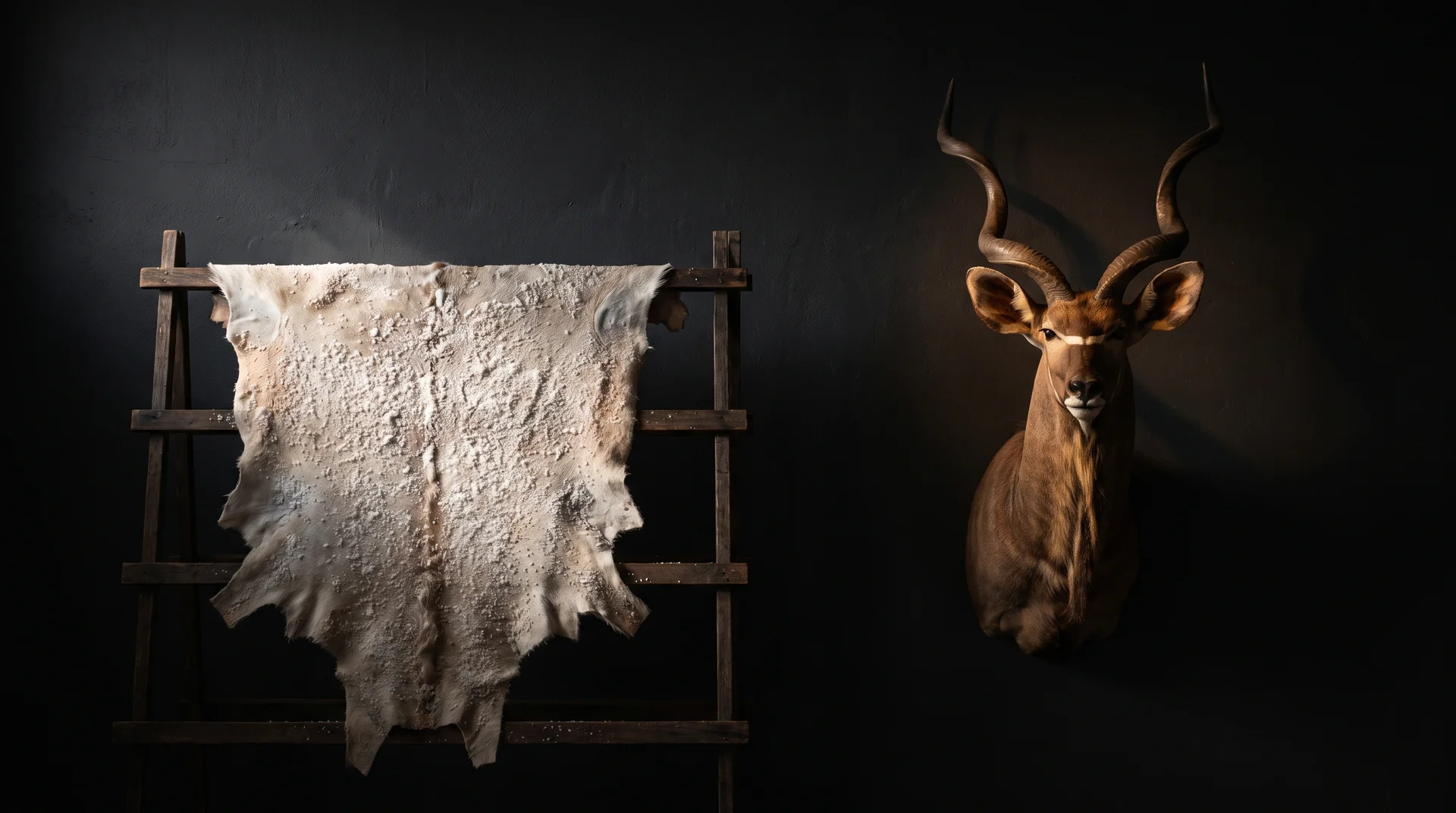
The short answer: dip and pack makes your trophies safe to ship — it does not make them safe forever. Dipping is a disinfection step required for export; your hides leave South Africa raw and untanned, and bacterial action is only stopped for good once a tannery tans them. Whether your trophies are “safe” comes down to a single sum: how long they will stay raw, measured against how long a salted hide stays stable. This guide walks through that sum honestly — including the part most hunters only learn about a year later: the queue at the American tannery.
It’s a worry we hear in our studio every season, usually phrased the same way: “Am I going to lose my hides?” After 45 years of preparing African trophies for the journey home, here is everything we would want you to know before you choose.
Dip and pack — formally, dipping and disinfection — is the process that makes raw hunting trophies legal and safe to export from South Africa. Skins and skulls are treated to kill pathogens and insects, dried, re-salted and crated for the voyage to your home country. It is the fastest and most affordable way to get trophies home, and it is the route most American hunters choose so their own taxidermist can do the mounting. One thing it is not: preservation. A dipped trophy is still a raw trophy.
In our studio the process follows the South African veterinary export protocol to the letter:
From the day your trophies arrive at Highveld, dip and pack typically takes two to six weeks at our studio; the export permits, CITES included, then set the pace — usually four to six months from your hunt to departure. Shipping is then handled with our sister logistics company, Oxi Logistics — custom heat-treated crates, by sea or by air.
No — and this is the misunderstanding that costs hunters trophies. The acid dip disinfects, and salt-drying pauses decay; neither stops it permanently. A dipped, salted hide is dormant, not preserved. In our experience a properly dipped, dried and re-salted hide stays stable for six to twelve months if it is stored well — cool, dry and off the ground. But bacterial action only ends for good when a tannery tans the hide. Until that day, moisture is the enemy: let a raw hide take on damp and the bacteria that were paused wake up within days. The result is “slip” — hair loosening and falling out of the hide — and slip cannot be repaired, only cut around.
In 45 years we have watched hides be lost at four points — and the dip tank is almost never one of them:
This is the sum we wish every hunter did before choosing. Dip and pack itself is quick — it is everything after it that stretches:
Add it up: counted from your hunt, a dip-and-packed hide is usually not tanned and back with your taxidermist until ten to eighteen months later — against a stable window of six to twelve months for a well-stored salted hide. That is the honest heart of the “are my trophies safe?” question. The numbers can work, but there is far less slack in them than most first-time safari clients realise, and the slack is not in your control once the crate ships. The single most useful thing you can do is ask your American taxidermist — before you decide to ship raw — what their tannery’s current turnaround actually is. For the full calendar from your hunt to the day your mount goes on the wall, see how long until your safari trophies are mounted at home.
Picture a first-time safari client. At home he hunts in November, in the cold, where an animal can hang overnight without a second thought. The Bushveld is a different world: even winter days climb warm, and the clock on an unskinned animal runs in hours, not days. He takes seven fine trophies, they are dipped, packed and shipped, the crate lands safely, the hides go to his taxidermist with a deposit — and then they wait for a tannery slot. A year after the hunt, the phone rings: three of the seven hides have slipped and cannot be mounted. It is the kudu, the nyala and the bushbuck — the three he cared about most. The dip and pack fees, the ocean freight, the deposit: all spent, with nothing to show but skull plates. Every taxidermist on either side of the Atlantic knows a version of this story, and nothing in it involved anyone doing anything unusual. That is exactly what makes it worth telling.
Yes — when four links hold: prompt field prep in the African heat, a professional dip and pack soon after the hunt, a dry and well-built crate, and a tannery slot on the other side that is weeks away rather than many months. Thousands of trophies make the journey safely every year. But it is an unforgiving chain: no step in it repairs damage; each one can only avoid adding more. If you cannot verify the last link — the tannery date — that is worth knowing before your trophies ship, not after.
Three routes leave our studio, and we offer all three — the right one depends on your relationship with your taxidermist at home, your budget and your appetite for risk:
We have no stake in pushing you toward any one of these — we do all three every week. What we care about is that you choose with the clock in view.
A short checklist that prevents most of the losses we see:
If you are planning a safari — your first or your fifteenth — talk to us before the hunt. We will walk you through dip and pack, tanning and taxidermy work honestly, with current timelines on both sides of the ocean, so you decide with open eyes. Start the conversation, or read more about our dip and pack and tannery services. Your trophies carry your story. Our job — whichever route you choose — is making sure it gets home.