
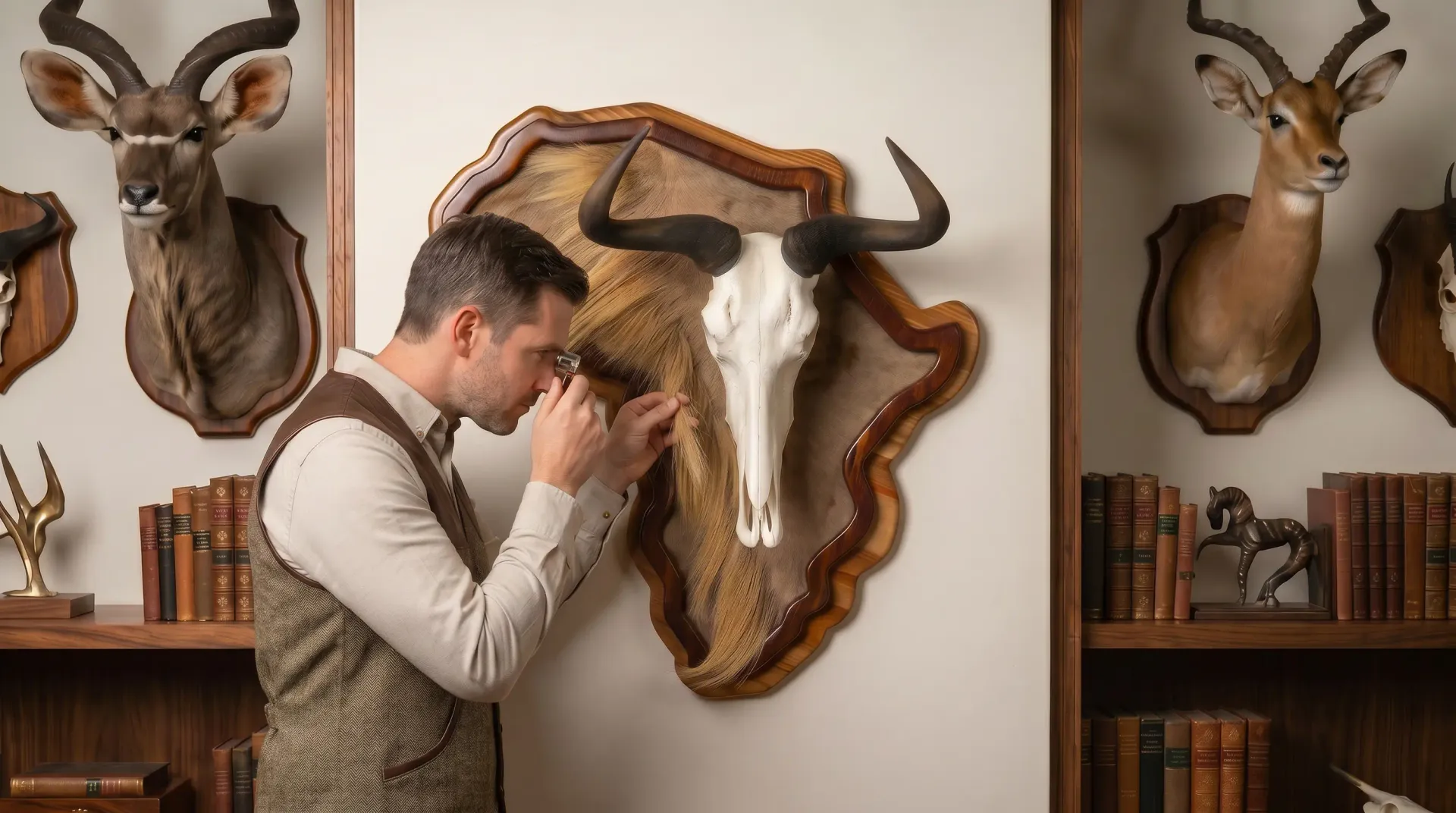
A professionally crafted taxidermy mount is designed to last for generations. But even the highest-quality taxidermy requires ongoing protection to preserve its appearance, detail, and structural integrity.
While many collectors focus on cleaning and display, one of the biggest threats to taxidermy often goes unnoticed until damage has already occurred.
Understanding how to protect taxidermy from pests, environmental damage, and long-term wear is essential if you want your trophy to continue telling its story for decades to come.
At Highveld Taxidermists, preserving that story has been our focus since 1981.
Because it is made from natural materials that stay vulnerable to both environmental conditions and insects. Left unattended, mounts suffer hair loss, fading, drying and cracking, infestation and a slow loss of detail — nearly all of it preventable with routine inspection.
Without proper care, mounts can experience:
Fortunately, most of these issues can be prevented through routine inspections and a few simple protective measures.
When people think about taxidermy damage, they often assume sunlight or humidity is the primary concern.
In reality, insects are one of the most common causes of long-term taxidermy damage.
Common taxidermy pests include:
These pests can quietly infest a mount and cause significant damage before they're ever noticed.
Because the damage occurs gradually, many collectors only discover a problem once hair loss or deterioration becomes visible.
Early detection is the key to preventing costly restoration work.
Regularly inspect your mounts and watch for:
The earlier an issue is identified, the easier it is to resolve.
One of the most common misconceptions in taxidermy care is that tanning completely protects a mount from insects. While tanning is essential for preserving the hide and preventing decomposition, it does not make a mount immune to pests.
Even professionally tanned hides can become vulnerable if environmental conditions allow insects to thrive.
This is why routine inspections remain an important part of long-term taxidermy maintenance.
Environmental control is the most effective prevention there is. Hold humidity between 45% and 55%, keep mounts in rooms with regular activity and airflow rather than dark, undisturbed corners, and inspect them every few months.
By maintaining the right environment, you can significantly reduce the risk of infestations and long-term damage.
Environmental control is one of the most effective forms of prevention. Our guide on How to Maintain Taxidermy at Home explains how humidity, temperature, and placement affect the longevity of your trophy.
Pests prefer quiet, undisturbed environments. Regular activity and inspections help reduce their ability to establish themselves unnoticed.
Avoid direct sunlight and UV exposure, keep mounts clear of fireplaces, heaters and air-conditioning vents, and hold temperature and humidity steady year-round. A stable environment is the single most effective way to preserve a mount long term.
Environmental factors can also affect the lifespan of your trophy.
To protect your taxidermy:
A stable environment remains one of the most effective ways to preserve taxidermy for the long term.
Act quickly. Isolate the mount from your other trophies and freeze it at -20°C (-4°F) for at least 72 hours — widely recognised as one of the safest and most effective ways to eliminate pests without damaging the piece.
Freezing is widely recognised as one of the safest and most effective methods of eliminating pests without damaging the mount.
Protecting your collection doesn't require complicated routines.
Simple preventative habits make a significant difference:
Regular maintenance is equally important. Read our guide on How to Clean and Care for Taxidermy Mounts for simple cleaning techniques that help keep your trophies looking their best.
A taxidermy mount represents more than an animal. It captures the memory of the hunt, the experience in the field, and a moment worth preserving.
Protecting your mounts from pests and environmental damage ensures those memories remain intact for future generations.
Long-term preservation is about more than maintaining a trophy. It's about safeguarding the story behind it.
Since 1981, we have focused on one thing: preserving your story with exceptional craftsmanship, precision, and care.
That commitment doesn't end when a mount leaves our studio.
Through proper taxidermy care, maintenance, and protection, your trophy can continue to reflect the same quality and detail for decades to come.
If you ever need guidance on preserving, protecting, or restoring your mounts, the team at Highveld Taxidermists is here to help.