
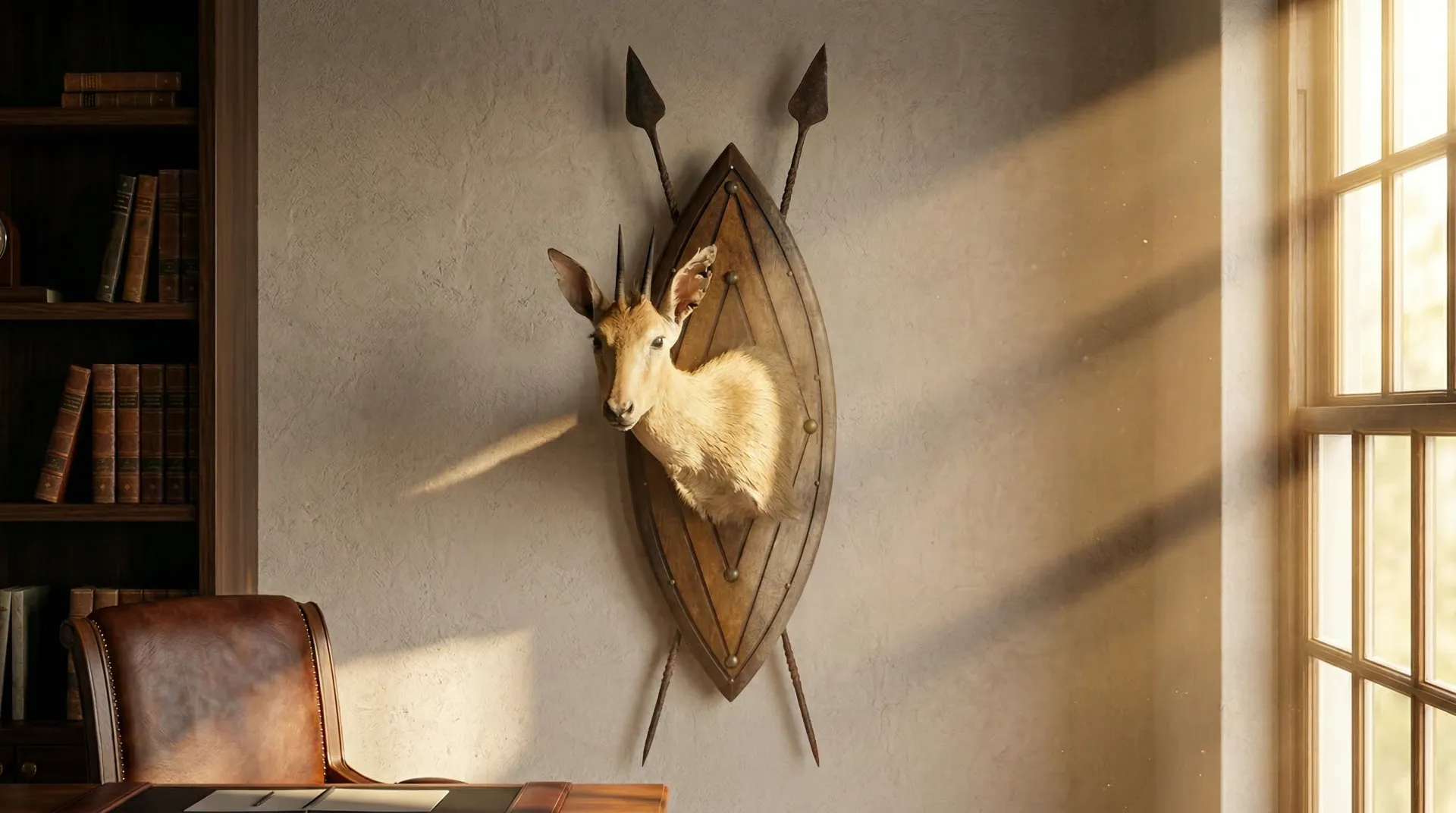
When your mount arrives, it’s not just a delivery. It’s the continuation of a story. Each piece represents time in the field, a moment that mattered, and something worth preserving properly. And the truth is, how you maintain your taxidermy at home starts with one simple thing - the environment you place it in.
At Highveld Taxidermists, every mount is built to last. But the space it lives in will determine how well it holds its form, colour, and presence over time.
Because taxidermy is made from natural materials that respond to their surroundings. You will not see changes overnight, but small shifts in temperature, humidity or light gradually affect both the look and the structure of a mount.
You won’t see changes overnight, but over time, small shifts in temperature, humidity, or light exposure can start to affect the look and structure of your mount.
Getting the environment right from the start makes all the difference.
There is no perfect temperature — what matters is avoiding constant change. Keep the room stable, avoid sudden swings of more than 10 degrees, and stay away from extreme heat or cold. Fluctuation makes hides expand and contract, which eventually cracks them.
When temperatures fluctuate, hides expand and contract. Over time, that can lead to cracking.
A good rule of thumb:
Consistency is what protects the structure.
Humidity plays a bigger role than most people realise.
Balanced humidity keeps everything stable, from the hide to the finer details.
Natural light looks great in a room, but direct sunlight is not your mount’s friend.
Over time, UV exposure will:
If possible, keep mounts out of direct sunlight or use UV filters on windows.
Keep mounts away from fireplaces, air vents and air conditioners. They look harmless but slowly dry out natural materials, and that is when a mount starts to lose its lifelike feel. Aim for somewhere with stable, moderate conditions.
That’s when mounts start to lose that lifelike feel.
Try to keep your mounts in areas with stable, moderate conditions.
If you get the environment right, you’re already doing most of the work.
It’s the foundation for preserving your taxidermy properly and keeping it looking the way it should for years to come.
Since 1981, every Highveld mount has been crafted with longevity in mind.
From the moment your trophy enters our studio to where it lives in your home, the goal is the same: to preserve your story exactly as it happened.
Getting the environment right is step one.
Next, we’ll walk through how to clean and care for your taxidermy mounts to maintain their detail and finish over time.