A professionally crafted taxidermy mount is designed to last for generations. But even the highest-quality taxidermy requires ongoing protection to preserve its appearance, detail, and structural integrity.
While many collectors focus on cleaning and display, one of the biggest threats to taxidermy often goes unnoticed until damage has already occurred.
Understanding how to protect taxidermy from pests, environmental damage, and long-term wear is essential if you want your trophy to continue telling its story for decades to come.
At Highveld Taxidermists, preserving that story has been our focus since 1981.
Taxidermy is created using natural materials, which means it remains vulnerable to environmental conditions and biological threats over time.
Without proper care, mounts can experience:
Fortunately, most of these issues can be prevented through routine inspections and a few simple protective measures.
When people think about taxidermy damage, they often assume sunlight or humidity is the primary concern.
In reality, insects are one of the most common causes of long-term taxidermy damage.
Common taxidermy pests include:
These pests can quietly infest a mount and cause significant damage before they're ever noticed.
Because the damage occurs gradually, many collectors only discover a problem once hair loss or deterioration becomes visible.
Early detection is the key to preventing costly restoration work.
Regularly inspect your mounts and watch for:
The earlier an issue is identified, the easier it is to resolve.
One of the most common misconceptions in taxidermy care is that tanning completely protects a mount from insects. While tanning is essential for preserving the hide and preventing decomposition, it does not make a mount immune to pests.
Even professionally tanned hides can become vulnerable if environmental conditions allow insects to thrive.
This is why routine inspections remain an important part of long-term taxidermy maintenance.
The best protection is prevention.
By maintaining the right environment, you can significantly reduce the risk of infestations and long-term damage.
Environmental control is one of the most effective forms of prevention. Our guide on How to Maintain Taxidermy at Home explains how humidity, temperature, and placement affect the longevity of your trophy.
Pests prefer quiet, undisturbed environments. Regular activity and inspections help reduce their ability to establish themselves unnoticed.
Pests are not the only concern.
Environmental factors can also affect the lifespan of your trophy.
To protect your taxidermy:
A stable environment remains one of the most effective ways to preserve taxidermy for the long term.
If you suspect an infestation, acting quickly is critical.
Freezing is widely recognised as one of the safest and most effective methods of eliminating pests without damaging the mount.
Protecting your collection doesn't require complicated routines.
Simple preventative habits make a significant difference:
Regular maintenance is equally important. Read our guide on How to Clean and Care for Taxidermy Mounts for simple cleaning techniques that help keep your trophies looking their best.
A taxidermy mount represents more than an animal. It captures the memory of the hunt, the experience in the field, and a moment worth preserving.
Protecting your mounts from pests and environmental damage ensures those memories remain intact for future generations.
Long-term preservation is about more than maintaining a trophy. It's about safeguarding the story behind it.
Since 1981, we have focused on one thing: preserving your story with exceptional craftsmanship, precision, and care.
That commitment doesn't end when a mount leaves our studio.
Through proper taxidermy care, maintenance, and protection, your trophy can continue to reflect the same quality and detail for decades to come.
If you ever need guidance on preserving, protecting, or restoring your mounts, the team at Highveld Taxidermists is here to help.

Looking after your taxidermy mount doesn’t need to be complicated. In fact, the best approach to taxidermy care is simple: light, consistent maintenance over time.
Done properly, routine taxidermy cleaning and preservation helps maintain the detail, colour, and lifelike appearance of your trophy for decades.
At Highveld Taxidermists, every mount is crafted with longevity in mind. Proper care ensures that craftsmanship continues to look its best long after the hunt is over.
Taxidermy is created using natural materials, which means it responds to its environment over time.
Dust buildup, sunlight, dry air, and improper handling can slowly affect the finish and overall appearance of your mount. The good news is that regular, gentle care goes a long way in preserving taxidermy properly.
The goal is not aggressive cleaning. It’s preventative maintenance.
Small, consistent steps help your mount retain the same realism and character it had the day it arrived.
Dust is the most common issue when caring for taxidermy mounts at home.
Over time, dust can dull the coat, flatten colour contrast, and reduce the lifelike appearance of the animal.
For slightly deeper cleaning, you can use a lightly damp microfiber cloth with a small amount of rubbing alcohol. Gently wipe in the direction of the hair to restore some of the natural sheen without damaging the hide.
When cleaning taxidermy art, less is always more.
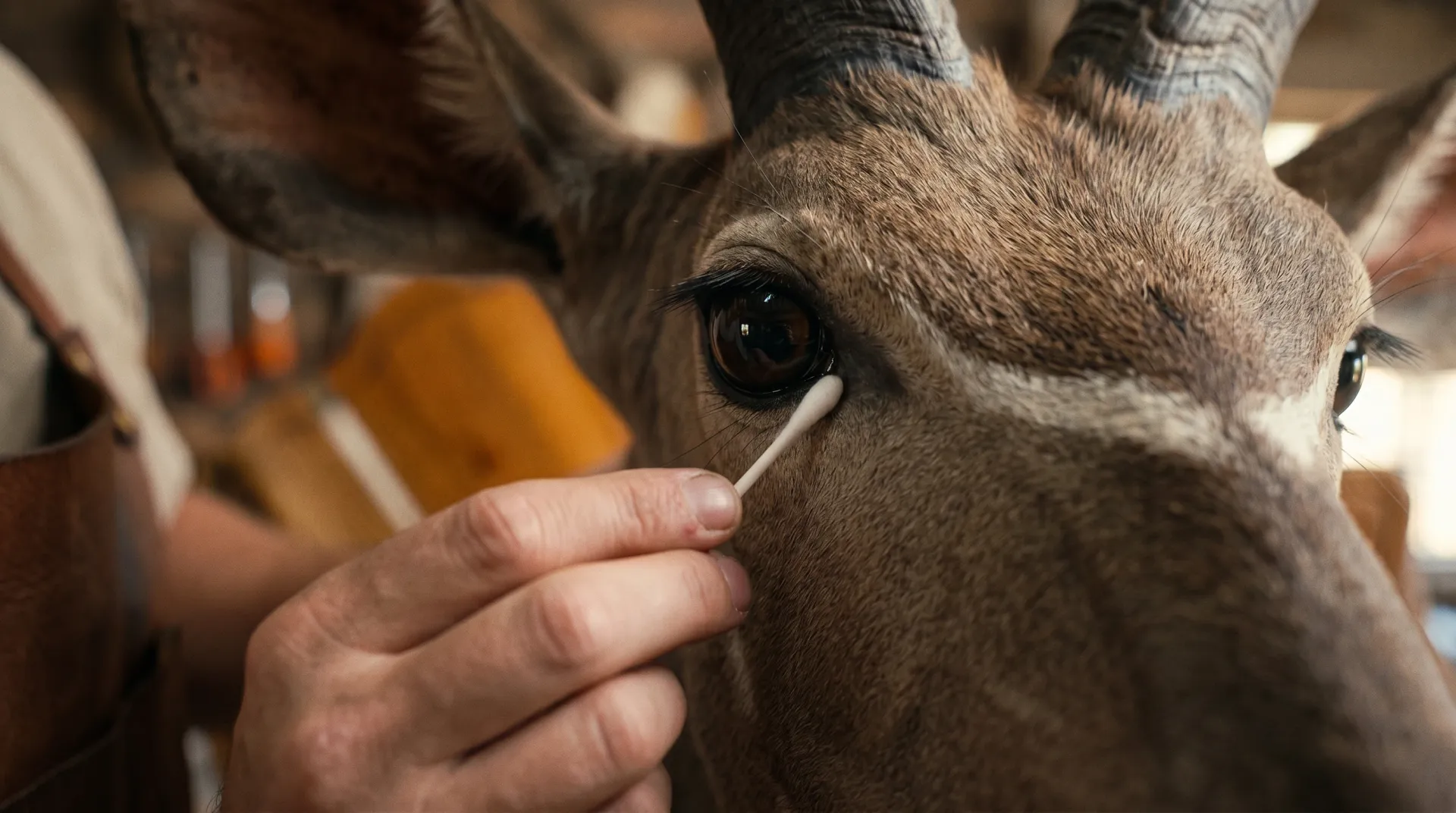
The eyes are often the focal point of a mount. If they appear dull or dusty, the overall impact of the piece is immediately reduced.
Fortunately, cleaning taxidermy eyes is quick and simple.
This small detail can make a significant difference in keeping your trophy looking lifelike and well maintained.
Horns and antlers generally require very little maintenance, but occasional care helps preserve their natural finish and prevent drying over time.
Every few years:
This helps maintain texture and condition while keeping the appearance natural and matte rather than overly polished.
The key to long-term taxidermy preservation is consistency.
You do not need complicated products or excessive cleaning routines. Instead, focus on:
Proper environmental control also plays a major role in preserving taxidermy mounts long term. Excessive humidity, direct sunlight, and fluctuating temperatures can all affect the hide and overall structure over time.
For more guidance, read our article on creating the ideal environment for your taxidermy mounts at home.
Many issues arise not from neglect, but from over-cleaning or improper care methods.
Avoid:
Proper taxidermy care should always be gentle and controlled.
Since 1981, Highveld Taxidermists has focused on creating mounts designed to stand the test of time.
Every piece is crafted with precision, anatomical accuracy, and long-term preservation in mind. Proper care at home ensures that the same quality and detail remain visible for generations.
A trophy represents more than a moment. It represents a story worth preserving properly.

When your mount arrives, it’s not just a delivery. It’s the continuation of a story. Each piece represents time in the field, a moment that mattered, and something worth preserving properly. And the truth is, how you maintain your taxidermy at home starts with one simple thing - the environment you place it in.
At Highveld Taxidermists, every mount is built to last. But the space it lives in will determine how well it holds its form, colour, and presence over time.
Taxidermy is made from natural materials. That means it responds to its surroundings.
You won’t see changes overnight, but over time, small shifts in temperature, humidity, or light exposure can start to affect the look and structure of your mount.
Getting the environment right from the start makes all the difference.
It’s not about having the “perfect” temperature. It’s about avoiding constant change.
When temperatures fluctuate, hides expand and contract. Over time, that can lead to cracking.
A good rule of thumb:
Consistency is what protects the structure.
Humidity plays a bigger role than most people realise.
Balanced humidity keeps everything stable, from the hide to the finer details.
Natural light looks great in a room, but direct sunlight is not your mount’s friend.
Over time, UV exposure will:
If possible, keep mounts out of direct sunlight or use UV filters on windows.
Places like fireplaces, air vents, or air conditioners might seem harmless, but they slowly dry out natural materials.
That’s when mounts start to lose that lifelike feel.
Try to keep your mounts in areas with stable, moderate conditions.
If you get the environment right, you’re already doing most of the work.
It’s the foundation for preserving your taxidermy properly and keeping it looking the way it should for years to come.
Since 1981, every Highveld mount has been crafted with longevity in mind.
From the moment your trophy enters our studio to where it lives in your home, the goal is the same: to preserve your story exactly as it happened.
Getting the environment right is step one.
Next, we’ll walk through how to clean and care for your taxidermy mounts to maintain their detail and finish over time.

For many of our American clients, the safari doesn’t actually end when the sun sets on that final evening in the Bushveld. The true "final chapter" happens months later, in the quiet of your study or trophy room, when you finally open a custom wooden crate and see your completed trophies for the first time.
We understand that for the international hunter, the "how do i get it home?" phase is often the only part of the journey that carries any stress. Navigating CITES permits, veterinary clearances, and thousands of miles of transit requires more than just a logistics plan - it requires a partner you can trust.
At Highveld Taxidermists, we’ve spent over 40 years ensuring the journey home is as refined as the hunt itself. Since the Ochsenbein family opened our doors in 1981, we’ve treated shipping not as a utility, but as a final act of respect for the animal and your memories.
The process of moving a masterpiece across the globe is intricate, but when handled with professional precision, it should be entirely invisible to you.
International shipping is a landscape of ever-changing regulations. We take full responsibility for the "heavy lifting" regarding paperwork - managing export permits, CITES documentation, and US Fish & Wildlife import requirements. We ensure every detail is flawless so your shipment moves through ports of entry without delay. With 45 years of experience, we have built a network of professional partners in the US that assist our clients by clearing the trophies and organizing the last mile delivery.
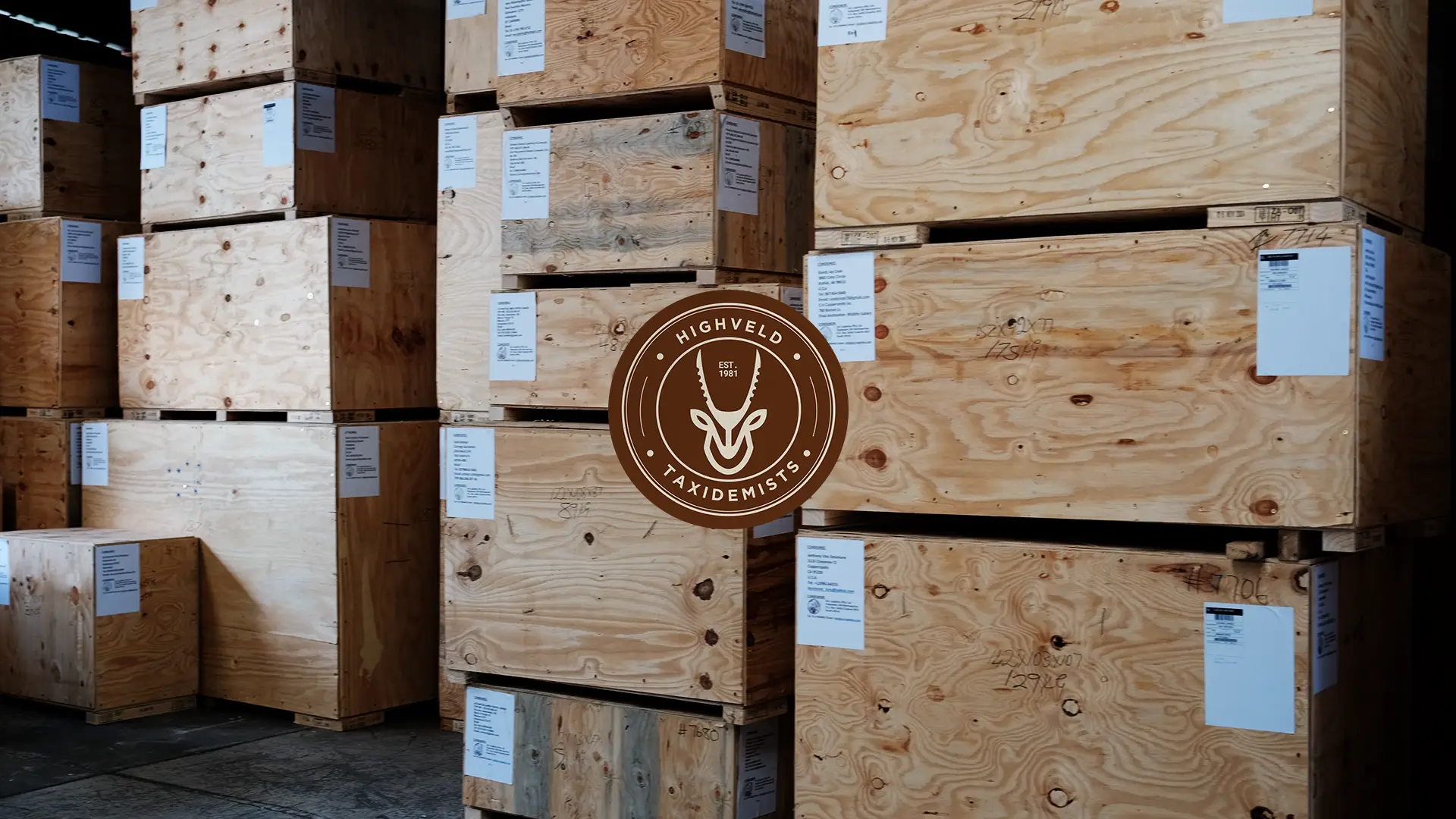
In our studio, we don’t believe in "one size fits all" Every crate is custom-built by our team using heat-treated timber.
"We treat crating as an engineering project. We use specialized internal bracing to ensure that even the most delicate ears of a Kudu or the intricate scenery of a custom base remain suspended and untouched, no matter how much the ship, plane or truck rocks."
What sets a premium studio apart is not just the quality of the glass eyes or the accuracy of the musculature - it is the peace of mind offered to the client.
Total Visibility into Your Legacy: We know that these pieces represent a significant investment of time and emotion. To honor that, we’ve removed the "black hole" of waiting. Every Highveld hunter receives a unique, personalized link to a chronologically ordered project photo page to follow their trophy’s progress. This portal provides a full line of sight from raw preparation through to the final master-crafting and crating. You are never left wondering; you are part of the story every step of the way.
The Heritage of the Ochsenbein Family: When you work with Highveld, you are partnering with a family-run legacy. Our 45-year reputation is built on the fact that we treat your trophies with the same reverence we would our own.
Your trophies are the physical vessel for your greatest stories. We are here to ensure those stories arrive home safely, exactly as you remember them. If you’re planning your next African pursuit, we’d be honored to discuss how we can preserve your legacy.