
Looking after your taxidermy mount doesn’t need to be complicated. In fact, the best approach to taxidermy care is simple: light, consistent maintenance over time.
Done properly, routine taxidermy cleaning and preservation helps maintain the detail, colour, and lifelike appearance of your trophy for decades.
At Highveld Taxidermists, every mount is crafted with longevity in mind. Proper care ensures that craftsmanship continues to look its best long after the hunt is over.
Because taxidermy is made from natural materials that respond to their environment. Dust buildup, sunlight, dry air and rough handling all dull a mount over time, and gentle routine care prevents almost all of it.
Dust buildup, sunlight, dry air, and improper handling can slowly affect the finish and overall appearance of your mount. The good news is that regular, gentle care goes a long way in preserving taxidermy properly.
The goal is not aggressive cleaning. It’s preventative maintenance.
Small, consistent steps help your mount retain the same realism and character it had the day it arrived.
Dust lightly once a month with a soft feather duster or microfibre cloth, always wiping in the direction of the hair and never pressing on delicate areas. Dust is the most common problem with mounts at home, and left alone it dulls the coat and flattens colour contrast.
Over time, dust can dull the coat, flatten colour contrast, and reduce the lifelike appearance of the animal.
For slightly deeper cleaning, you can use a lightly damp microfiber cloth with a small amount of rubbing alcohol. Gently wipe in the direction of the hair to restore some of the natural sheen without damaging the hide.
When cleaning taxidermy art, less is always more.
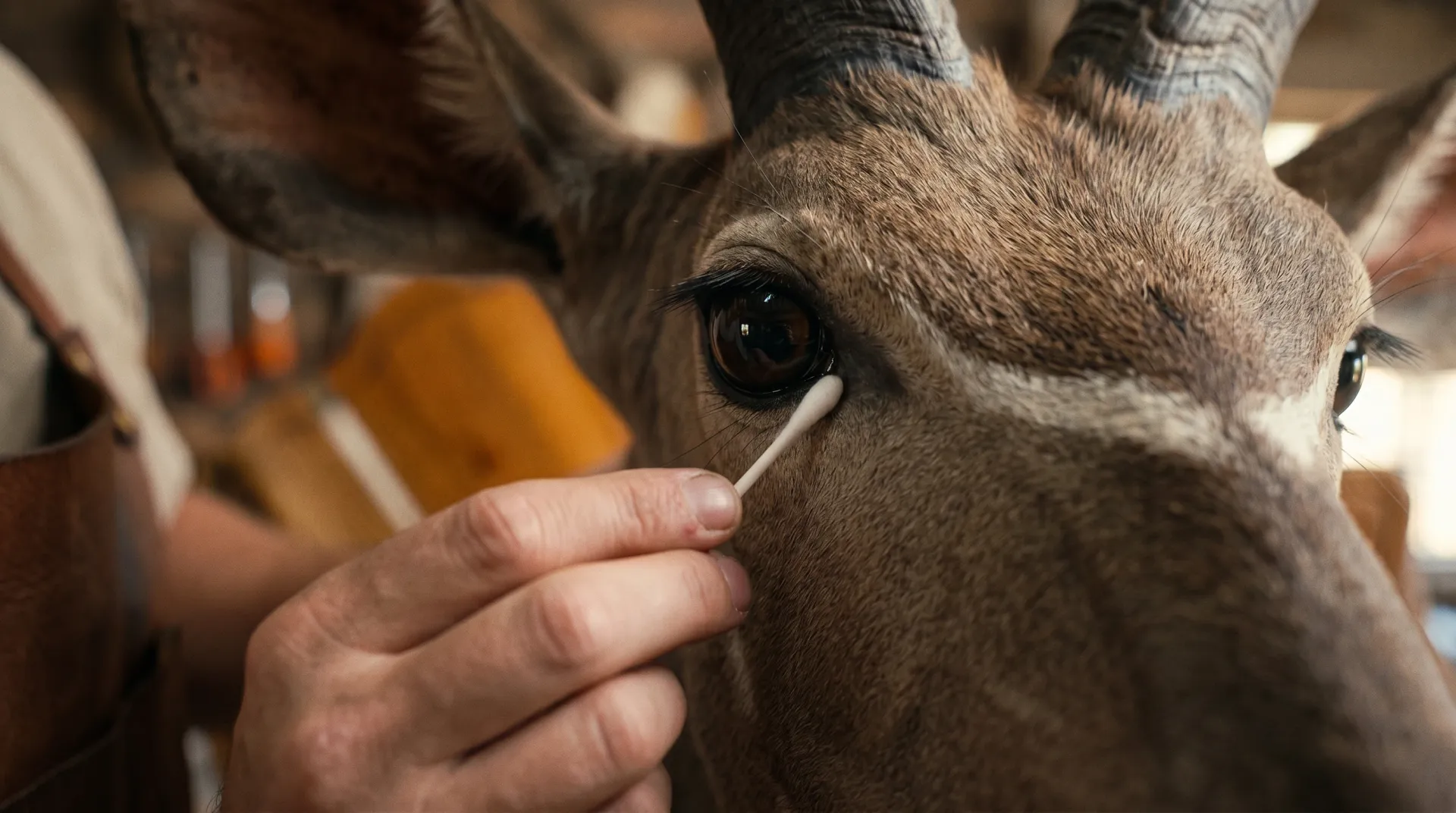
Use a cotton swab with a very small amount of glass cleaner, wiping the glass surface only and avoiding the surrounding hide and eyelids. The eyes are the focal point of a mount, so dull or dusty glass reduces the whole piece immediately.
Fortunately, cleaning taxidermy eyes is quick and simple.
This small detail can make a significant difference in keeping your trophy looking lifelike and well maintained.
Every few years, apply a light coat of clear wax, let it dry fully, then buff gently with a soft cloth. Horns and antlers need very little maintenance otherwise, and the wax keeps the finish natural and matte rather than overly polished.
Every few years:
This helps maintain texture and condition while keeping the appearance natural and matte rather than overly polished.
The key to long-term taxidermy preservation is consistency.
You do not need complicated products or excessive cleaning routines. Instead, focus on:
Proper environmental control also plays a major role in preserving taxidermy mounts long term. Excessive humidity, direct sunlight, and fluctuating temperatures can all affect the hide and overall structure over time.
For more guidance, read our article on creating the ideal environment for your taxidermy mounts at home.
Many issues arise not from neglect, but from over-cleaning or improper care methods.
Avoid:
Proper taxidermy care should always be gentle and controlled.
Since 1981, Highveld Taxidermists has focused on creating mounts designed to stand the test of time.
Every piece is crafted with precision, anatomical accuracy, and long-term preservation in mind. Proper care at home ensures that the same quality and detail remain visible for generations.
A trophy represents more than a moment. It represents a story worth preserving properly.