
What Else Comes Home From Your Safari: Furniture, Leather and Other Products Made From Your Trophies
More of Your Safari Than the Mount
A shoulder mount uses the cape and the skull. From a typical plains-game hunt, the parts left over after the mounts are usually the back hides, the tails and the feet. They are often not thought about at all, and many hunters do not realise these parts can come home as something useful.
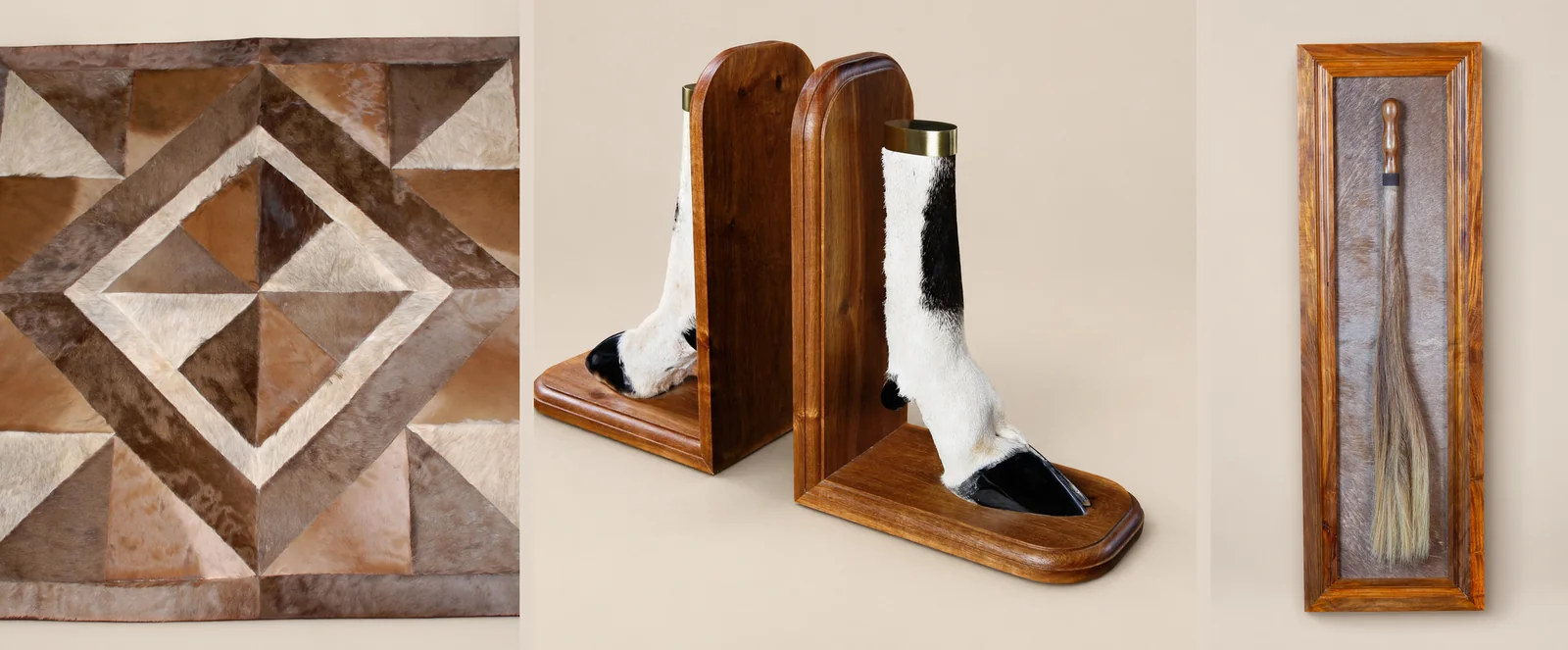
Clients often ask us what to do with them, so we designed an extensive range of things that can be made from them. Patch rugs, leather, lamps, gun racks and display frames can all begin with these hides, tails and feet, and some of these parts can be built into furniture as well. Some are practical, some are decorative, and several can live on a floor or a desk rather than on a wall that is already filling up.
Ask for Every Part to Be Sent to Us
For these parts, the instruction worth giving in the field is simple: ask for the back hides, tails and feet to be sent to our studio with your trophies. If every part reaches us, you do not have to decide what to make from them until your taxidermy discussion with us. The field preparation of a skin is the same whether it later becomes leather or a hair-on tanned hide.
What most often rules these pieces out is a part that never reaches us. Asking for everything to be sent keeps these choices open until you have had the chance to think them through. Once your skins are with us, the earlier tanning starts, the better your hides, so it helps to tell us your plans early.
A whole-skin flat rug is the one exception that has to be decided in the field, and our mount guide explains why a flat rug needs its own cut. It is also worth adding this request to the things to raise with your PH before the hunt.
Back Hides: Leather or Hair-On
A back hide can be made into leather, or tanned as a hair-on hide with the coat left in place. We generally suggest leather for buffalo and eland back hides, because the leather is tough and has a good grain. For the back hides of the other antelope, we suggest hair-on tanning instead. Hippo, elephant and rhino hides are also made into leather, and these have a beautiful grain and look.
Back hides can also become a custom patch rug. It combines all the back hides from one safari into a single piece.
The tanning happens in our in-house tannery, metres from the studio floor. Photographs are uploaded to your photo portal as soon as the skins have been hydrated, so you can see every hide.
Feet Made Into Lamps, Bookends and Gun Racks
We make the feet into:
- lamps
- bookends
- coat racks
- wall-hanging gun racks
- floor-standing gun racks
- coffee tables.
Our bespoke pieces gallery shows a foot lamp, bookends and a gun rack among other pieces, so you can judge the finish before you choose.
Tails, Fly Swatters and Display Frames
On their own, tails can be made into decorative fly swatters. Tails and back hides together can go into a custom display frame that looks like an artwork. These frames work especially well for colour variants, such as wildebeest and gemsbok.
Furniture From Our Own Workshop
We have our own fully functional carpenter’s workshop, and it can make all types of furniture, including couches, lamps and coffee tables. Every design is completely custom and made to your specification. We work in solid wood, not veneers.
The workshop also works with granite and other stone. Stone has been especially popular in the wooden pedestal bases we make for our clients. We specialise in custom builds, and a recent example of this is a pedestal we built that has hidden compartments that open only when the owner uses a magnetic key.
The same carpentry team customises the pedestals, shields and accents for each trophy, and our Zulu shields are hand-carved in that workshop too. You will find examples of the furniture in our African furniture gallery.
Skulls, Horns and Hides Built Into the Design
We also incorporate hides, bones and skulls into our African furniture designs. Each piece is made to suit your trophy, your requirements and the decor you already have.
A cape buffalo hide can be stretched across a hand-made frame, and antelope horns can be built into a table design. Among our recent projects are custom hippo skull coffee tables, a buffalo skull coffee table and an elephant skull pedestal that includes the carved femur bones in the design.
Designing Your Piece Together
Your piece starts with your taxidermy discussion with us, which is normally held online. You describe what you have in mind, or tell us which item you would like some help with. Our team then comes up with ideas and design options that show what your finished piece will look like.
Some clients send photographs for inspiration, or to show us what they mean, and some send sketches of their own. Our in-house design team sketches and illustrates the ideas before work starts, so that the client can visualise the piece.
Home in the Same Crate as Your Mounts
Finished creations can travel to the US in the same crate as your mounts. Your pieces go into sturdy plywood crates, with interior bracing and protection for each item, and we pack the containers for sea freight ourselves, at our studio. The hunting permit issued to you allows the export of every part of each animal listed on the hunting register. Our guide to trophy shipping to the USA covers the rest of that journey.
Frequently Asked Questions
A few short answers about the parts of your safari that do not go into a mount.
Can back hides, feet and tails be exported with my trophies?
Yes, the hunting permit issued to you allows the export of every part of each animal listed on the hunting register, including the back hides, feet and tails. Once they have been made into finished pieces, they can travel to the US in the same crate as your mounts.
Do I need to decide what to make before the hunt?
No, as long as every part is sent to our studio with your trophies. You do not have to decide what to make from these parts until your taxidermy discussion with us, because the field preparation of a skin is the same for leather or a hair-on tanned hide. The one exception is a whole-skin flat rug, which needs its own cut and so has to be decided in the field.
Which back hides make the best leather?
Buffalo and eland back hides are the ones we generally suggest for leather, because the leather is tough and has a good grain. Hippo hide is also made into leather. For the back hides of the other antelope, we suggest hair-on tanning instead.
Bring the Rest of Your Safari Home
For most hunters the mount is the centre of what comes home from a safari, but it does not have to be all of it. A patch rug, a foot lamp or a framed tail and hide can live in the rooms you use most.
Highveld has been run by the Ochsenbein family since 1981, in Erasmia near Centurion, and all of our taxidermy work is done at the studio in South Africa. Our client-liaison and administrative office in Charlotte, North Carolina, supports US clients with consultations, logistics and trophy intake.
If your hunt is still ahead of you, or your trophies are already on their way to us, get in touch and tell us what you have in mind. We will work out the rest with you in your taxidermy discussion.


